
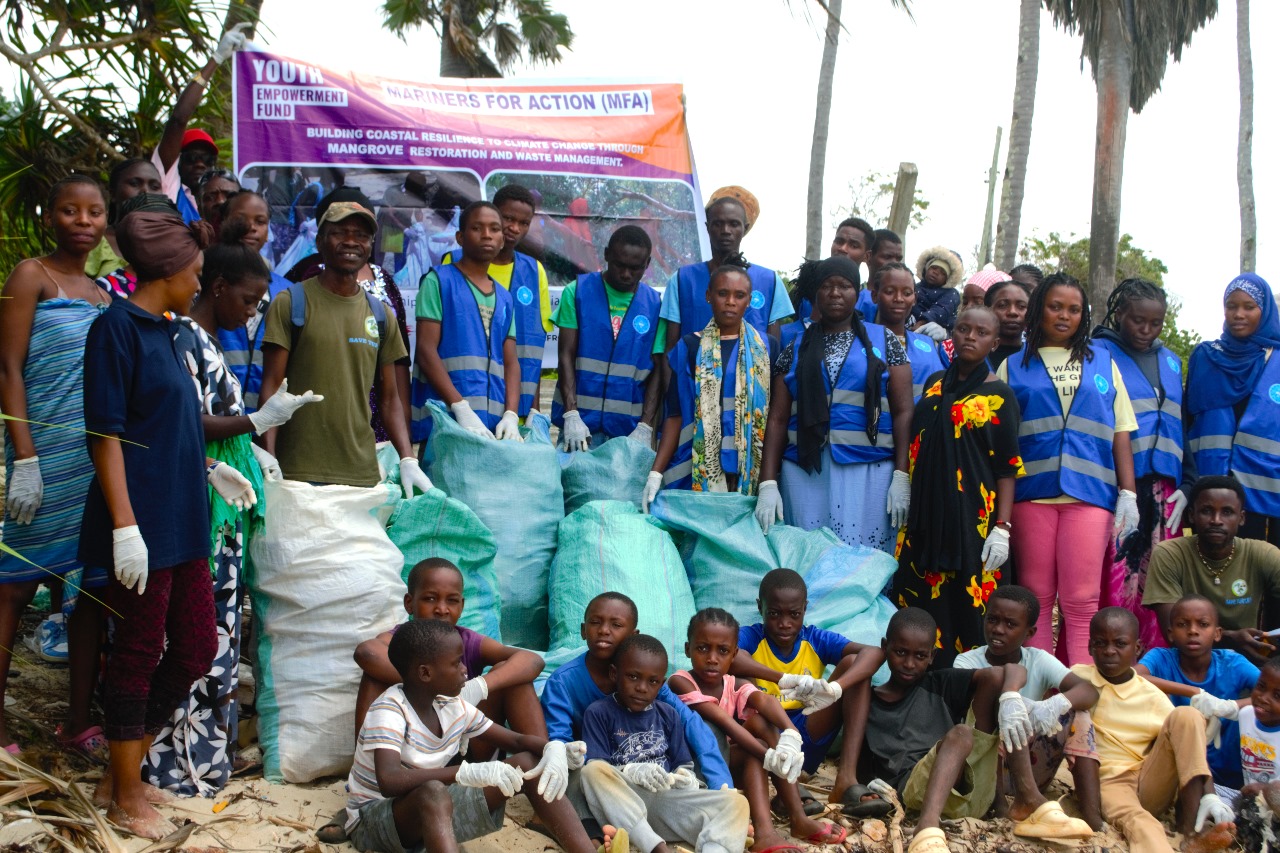
On a bright Saturday morning, youth volunteers from the Mtwapa Maweni Turtle Conservation Project, in partnership with Mariners For Action and support from the Kenya Wildlife Service, gathered along the Mtwapa coastline for a hands-on cleanup targeting one of the region’s most polluted beach stretches.
Over 200 kilograms of waste were collected during the exercise, which focused not just on collection, but also sorting and weighing of the debris. Volunteers separated plastics, glass, metal, and organic waste into designated sacks to help streamline proper disposal and recycling.
Plastics accounted for nearly 70% of the total waste gathered with most of it consisting of single-use bottles, packaging wrappers, and fishing gear fragments.
The cleanup area, close to key turtle nesting sites, has seen rising levels of marine pollution, largely due to poor waste management upstream, illegal dumping, and tidal movements carrying urban runoff. Much of the debris threatens nesting turtles and hatchlings, which often ingest or get entangled in plastic waste.
“We wanted to go beyond just picking up trash,” said Linus (Partner, Mariners For Action) “By sorting and recording what we collect, we’re creating data that speaks to the root causes of pollution in our area.”
The activity ended with a short debrief session, where volunteers shared reflections and discussed long-term solutions such as community education, stronger enforcement of anti-dumping laws, and involving local businesses in waste reduction efforts.